
Apple's Second Headquarters

Apple's Second Headquarters

Also known as Apple Park, it is the headquarters of Apple Inc. located in Cupertino, California. It was opened to employees in April 2017 while construction was still ongoing, replacing the Apple headquarters that opened in 1993. The main building designed by Norman Foster has earned the media nickname "spaceship" due to its scale and circular ground scraper design. Covering an area of 1.46 square kilometers, 80% of which is green space, native plants and trees adapted to drought are planted, and an artificial pond is located in the central courtyard. Apple co-founder Steve Jobs hoped that the park would look more like a natural sanctuary.
Laarne Castle, Belgium

Laarne Castle, Belgium

Located in Laarne, Belgium, it is a castle with a long history. Built around 1200 years ago, it was originally a wooden structure. Subsequently, the foundation was raised and a more sturdy building was constructed. Around 1300, castles began to be built using stone, forming the current watchtower. In less than a century and a half, the castle area developed into a complete castle with a moat. Witnessing hundreds of years of historical changes in Belgium, it is an important cultural heritage of Belgium. It has extremely high historical value and is also an important example for studying medieval castle architecture. The architectural style and structural layout reflect the political, economic, and cultural characteristics of the society at that time.
Fushimi Inari Daisha, Japan

Fushimi Inari Daisha, Japan

It is the headquarters of Inari Shrine located in Fushimi ku, Kyoto City, Kyoto Prefecture, Japan, and enshrines Inari Shrine. Located at the foot of Inari Mountain at an altitude of 233 meters, including a trail leading to several smaller shrines on the mountain, the total length is 4 kilometers and it takes about 2 hours to complete. At first, it was mainly worshipped as a deity for rice and agriculture, but merchants also regarded it as the guardian deity of commerce. Fushimi Inari Daisha has about 10000 torii torii, each donated by a Japanese company. Among them, about 800 torii are arranged in rows, forming a thousand torii torii, giving people the impression of a tunnel.
Chateau Bretchet in France

Chateau Bretchet in France

It is a medieval building located in the city of Misirac in the Loire department of the Atlantic in France. It was first built in the 14th century and underwent reconstruction in the 19th century. It has been listed as a historical monument since January 7, 1926, and its surrounding environment has also been listed as a protected area since May 17, 1943. Attracting tourists with its romantic and charming architectural style, although the interior is not open to the public, its outer courtyard is available for visitors to visit and appreciate the environment listed as a historical monument. Currently, it is a luxury hotel and restaurant surrounded by an 18 hole golf course, providing visitors with a place that combines historical value with modern comfort.
Skogaholm Estate, Sweden

Skogaholm Estate, Sweden

Part of the Skansen Open Air Museum located in Stockholm, Sweden. This 18th century estate was originally located in Nagel, southern Sweden, and was later relocated to the Scanson Museum to better protect and showcase its historical value. Not only is it a building, but it also represents the lifestyle and culture of that era. The garden of the estate is a major highlight of the museum, showcasing the garden art and horticultural techniques of the estate in the 18th century. This estate is an important part of the Skansen Museum and a valuable resource for understanding traditional Swedish architecture and lifestyle.
Makusovsky Castle, Slovakia

Makusovsky Castle, Slovakia

A historic castle located in the village of Markus š ovce in the Spi š sk á Nov á Ves region of Slovakia. Established in 1284, located on a highland in the Horn á dska Basin, near the local church. During the 15th and 16th centuries, it underwent significant renovations, forming a small but heavily fortified castle. Although it was captured and destroyed by Levo č a's army in 1527, it was repaired in the second half of the 16th century and underwent final repairs in 1789, mainly to repair the damage caused by the 1773 fire.
Ramadin El College, Lucknow, India

Ramadin El College, Lucknow, India

A famous private educational institution located in Lucknow, Uttar Pradesh, India, founded by French adventurer and British East India Company officer Major General Claude Martin in 1845. The architectural complex was converted from Martin's private residence, with the Constantia Building being its iconic building, praised by The Economist as "the best preserved colonial building in Lucknow". Renowned for its excellent academic tradition and rich historical heritage. During the Indian uprising in 1857, the faculty and students of the college participated in the defense of Lucknow, making it the only school in the world to receive the Royal War Merit Honor.
Monte Corte Castle and Santa Anna Chapel in Catalonia, Spain

Monte Corte Castle and Santa Anna Chapel in Catalonia, Spain

The small town of Montorn è s de Segarra located in Catalonia, Spain. The castle was first recorded in the 11th century by knight Guillem Isarn de Trevics in his will. At the end of the 15th century, the original castle was rebuilt, forming the spectacular rectangular fortress we see today, with two twin towers, a large semi-circular Romanesque facade, Renaissance style windows, and an arcade. Not far in front of the castle is the St. Anne's Chapel, built in the 16th century, which together with the castle forms an important historical site in the area.
Guadalajara, Spain, Galverde Solbe Castle

Guadalajara, Spain, Galverde Solbe Castle

A historic castle located in the province of Guadalajara, Spain, specifically situated in the town of Gave de Solbe. This castle is a 15th century building and one of the outstanding representatives of medieval defensive architecture in the Guadalajara region. Its sturdy city walls and towers still stand today, showcasing its past glory and solidity to the world. Not only is it a historical site, but it has also become a popular tourist attraction in the area, attracting visitors interested in medieval architecture and history.
Madrid Multi functional Cultural Center, Spain
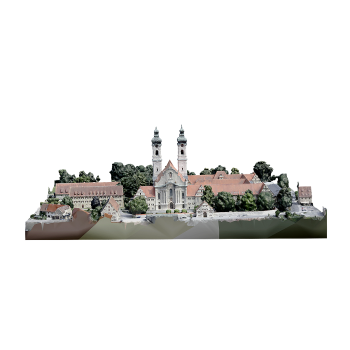
Madrid Multi functional Cultural Center, Spain

A multifunctional cultural center located in Madrid, Spain, designed by Belgian architect Henri Lenaerts. The center is renowned for its unique modern architectural style and sensitivity to the environment. Gardens and external spaces are important components that not only provide green space and natural lighting for the building itself, but also enhance the visitor experience through carefully designed landscapes. These external spaces are often used to host various cultural events, such as art exhibitions, concerts, and community gatherings, becoming an important venue for community cultural life.
Zwefalten Monastery in Baden-W ü rttemberg, Germany

Zwefalten Monastery in Baden-W ü rttemberg, Germany

A former Benedictine monastery located near Leithringen in the state of Baden-W ü rttemberg, Germany. Built in 1089, during a period of controversy over the right to confer titles, it was established by Jerome of Aham and Count Kuno on the recommendation of the bishop. Not only is it a religious site, but it is also an important component of the region's history and culture. Prior to 1802, it was an important religious and cultural center with profound influence on the surrounding areas. Nowadays, as a historical relic, it attracts numerous tourists and history enthusiasts to visit.
power station

power station

Odenwald Elbach Castle, Germany

Odenwald Elbach Castle, Germany

A historic castle located in the Odenwald region of Germany, it is not only a museum but also a treasure trove of culture and art. The castle houses a large collection of precious artworks and antiques, including the collection of the famous Count Franz I von Elbach El. There is also the 'German Ivory Museum', which showcases exquisite ivory carving art. History can be traced back to the 16th century, it is a treasure trove that can be walked into, and a place full of happiness and excitement, where visitors can hardly fully appreciate its rich collection.
Abandoned buildings in Riga, Latvia

Abandoned buildings in Riga, Latvia

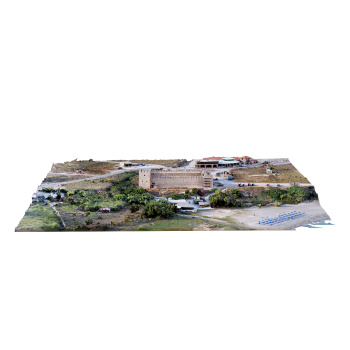
Fragokastelo Castle, Crete, Greece

Fragokastelo Castle, Crete, Greece

A historical site located on the southern coast of Crete, Greece. This castle was built between 1371 and 1374 by the Venetians and was initially named the Saint Nikitas Castle in honor of the nearby church. However, due to dissatisfaction with the Venetian rulers, the locals contemptuously referred to it as Fragokastelo, meaning "Frankish castle", and this name was eventually widely accepted, including by the Venetians themselves. Not only was it a military fortress built by the Venetians on the island of Crete, but it was also built to control the residents of the rebellious Sfabria region and resist pirate attacks.
Grosskamburg Monastery, Germany

Grosskamburg Monastery, Germany

A historic monastery located near Schwabenhal in the state of Baden-W ü rttemberg, Germany. Located on a highland above the Koch Valley, it is renowned for its unique geographical location and magnificent scenery. The history can be traced back to the 11th century, initially as the castles of the counts of Rotenburg and Komsburg, and later converted into monasteries at the end of the 11th century. Known for its Romanesque architecture and Baroque style churches, particularly its famous Romanesque chandeliers and gilded altar front walls. These precious cultural relics are the two major treasures of the monastery, attracting numerous tourists and history enthusiasts to visit.
Abandoned Industrial Site in Niigata Prefecture, Japan
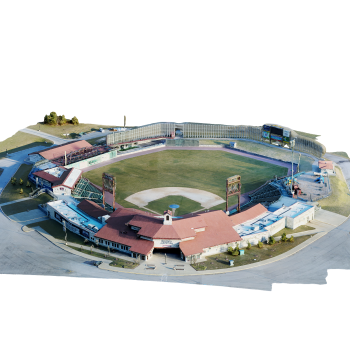
Abandoned Industrial Site in Niigata Prefecture, Japan

An abandoned industrial site located in Niigata Prefecture, Japan. The facilities that were once used for industrial production were later abandoned due to various reasons. Abandoned factories often become destinations for explorers and photography enthusiasts due to their unique sense of history and industrial aesthetics. These sites are also often used for creating 3D models to document and showcase their current condition. Reflecting the historical changes in the industrialization process, it also reminds people to pay attention to the protection and reuse of industrial heritage.
Drone photography of baseball field scenes

Drone photography of baseball field scenes

Victorian era railway station drone aerial survey

Victorian era railway station drone aerial survey

Conducting drone surveys at Victorian era train stations is an activity that combines history and modern technology. The Victorian era, from the mid-19th century to the early 20th century, was a golden period for the industrial revolution and railway development in Britain. As an important transportation hub at that time, train stations carried rich historical and cultural values. By using drones for aerial surveys, detailed 3D scanning and data collection can be conducted on these historic train stations. These high-precision data are of great significance for building protection, restoration work, and historical research.
Scenes around Lemu Church in Finland

Scenes around Lemu Church in Finland

Lemu Church and its surroundings are located in the Masku region of Finland and are a historic church. Built in the 15th century AD, it is one of the oldest wooden churches in Finland. Renowned for its unique architectural style and ancient cultural heritage. Constructed from wood and featuring traditional Finnish architectural style. The Masku area is surrounded by beautiful scenery and pleasant environment. There may be pleasant fields, lakes, and forests in the surrounding area, making it a favorite place for tourists and believers. As a part of Finnish culture and history, Lemu Church and its surrounding attractions are important windows into understanding traditional Finnish architecture and religious beliefs.
Kaunas, the cultural capital of Europe
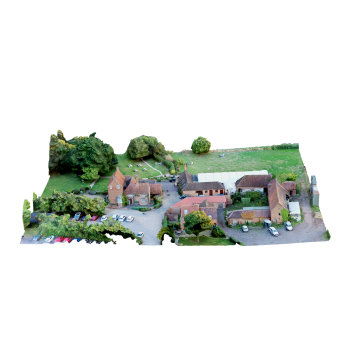
Kaunas, the cultural capital of Europe

Kaunas was named the European Capital of Culture in 2022 in recognition of the city's rich cultural heritage and contemporary cultural vitality. Kaunas, as the second largest city in Lithuania, is renowned for its unique historical architecture, artistic atmosphere, and innovative spirit. Kaunas and its surrounding areas have transformed into a stage full of creative and multicultural activities, hosting a series of festivals, exhibitions, concerts, and performances aimed at creating and spreading joy, attracting widespread participation from local residents and international tourists. It also strengthened its connections with other cities in Europe, jointly celebrating Europe's cultural heritage and identity.
Wessel Manor Wedding Venue in the UK

Wessel Manor Wedding Venue in the UK

The Wessel Manor wedding venue is an ideal wedding venue located in the UK. A beautiful rural estate located in a peaceful natural environment. The estate boasts spacious lawns and lush gardens, providing a romantic and mysterious wedding backdrop. As a wedding venue, Wessel Manor offers various facilities and services to meet the needs of newlyweds and guests. The estate has magnificent indoor and outdoor venues, suitable for holding wedding ceremonies and banquets. Indoor venues are typically equipped with modern sound and lighting systems to provide a comfortable environment. We also provide professional wedding planning services.
Polish city center

Polish city center